You’re showing up to the gym. You’re tracking your macros. You’ve got the protein powder, the pre-workout, maybe even a foam roller you use occasionally.
And yet — something isn’t adding up. Your lifts have stalled. Your body composition isn’t shifting the way it should. You’re tired all the time, which honestly feels a little ironic given how hard you’re working.
Here’s what most fitness content glosses over: how sleep affects your fitness results is just as significant as how you train or what you eat. Not because the other stuff doesn’t matter — it absolutely does — but because without quality deep sleep, your body can’t actually process the work you’re putting in. You’re essentially writing checks that your recovery can’t cash.
How Sleep Affects Fitness: The Basics
Sleep isn’t passive. While you’re unconscious, your body is running what’s essentially a full overnight maintenance program — repairing muscle tissue, rebalancing hormones, locking in movement patterns you practiced that day, and resetting your nervous system for tomorrow’s session.
The star of this process is growth hormone, which your body releases primarily during deep sleep. This is the hormone most responsible for muscle repair and development. Here’s the sobering part: if you’re consistently sleeping fewer than six hours a night, growth hormone secretion can drop by up to 70%. That’s not a rounding error. That’s the difference between actually building the muscle you’re training for and just repeatedly breaking it down without letting it recover.
Your central nervous system also takes a significant hit from poor sleep. Coordination drops, reaction time slows, and workouts that would normally feel manageable start feeling brutal. Research consistently shows measurable declines in sprint times, accuracy, and overall athletic output after fewer than eight hours of sleep. It’s not in your head — you actually are performing worse.
And it’s not just physical. Sleep is one of the most direct levers you have on your mental health — affecting your mood, motivation, stress resilience, and ability to stay consistent with any habit, fitness included. When sleep suffers, so does the psychological side of training: the drive to show up, the patience to trust the process, and the mental clarity to make good decisions about food and recovery.
How Sleep Affects Body Composition
If changing how your body looks is part of your fitness goal, this is the section worth reading carefully.
When you don’t get enough sleep, your body stays stuck in stress mode, keeping cortisol levels high all day long. On top of that, the hormones that control appetite get thrown off — leptin, which helps you feel full, decreases, while ghrelin, the hormone that makes you hungry, increases. That mix makes overeating much harder to resist and often leaves you craving fast-energy foods like carbs and high-calorie snacks.
So you’re tired, you’re hungrier than usual, your fullness cues are muted, and your impulse control is weakened. That’s not a willpower problem. That’s biology working against you.
Insulin sensitivity also worsens with poor sleep. After just a few nights of restricted sleep, your cells become less responsive to insulin — meaning carbohydrates are more likely to be stored as fat rather than used for energy or muscle glycogen. You could be eating exactly right and still working against your own goals if your sleep isn’t there.
Studies also consistently show that people sleeping fewer than six hours a night have measurably slower metabolic rates than those sleeping seven to nine hours, even when activity levels and food intake are controlled for. If fat loss has stalled and nothing about your diet or training explains it, sleep is worth examining before anything else.
The Sleep Stages That Matter Most for Fitness
Understanding the basics of sleep architecture can help you stop accidentally undermining your own recovery.
Deep sleep (slow-wave sleep) is where physical restoration happens. Blood flow to your muscles increases significantly, your core temperature drops, and tissue repair kicks into high gear. If you’re waking up frequently during the night, sleeping in a warm room, or drinking alcohol before bed, you’re likely cutting this stage short — and that’s where the real fitness cost lives.
REM sleep plays a more cognitive role, but it still matters for fitness. This is where motor learning gets consolidated — the movement patterns you drilled in the gym become more automatic and ingrained during REM. Athletes or gym-goers working on new skills or complex lifts benefit especially from adequate REM, which tends to dominate the later cycles of the night. Cutting sleep short by even an hour can disproportionately reduce REM time.
Light sleep stages handle memory and mental recovery — including the focus, motivation, and decision-making capacity you need to keep showing up consistently.
Sleep and Muscle Recovery: Why You’re Still Sore
Every hard workout creates microscopic damage to your muscle fibers. That’s the whole point — the repair process is what makes you stronger. But that repair depends on your body managing inflammation correctly, and sleep is central to how that happens.
During quality sleep, your body produces cytokines — proteins that regulate your immune and inflammatory responses. Some cytokines promote deeper sleep, creating a helpful feedback loop. Others specifically target the inflammation caused by exercise, helping your body resolve it efficiently so you can recover faster and train again sooner.
When sleep quality is poor, cytokine production gets disrupted. You’re left in a state of prolonged inflammation that slows recovery, increases injury risk, and makes you more susceptible to getting sick. For anyone trying to stay consistent with training, a week lost to illness is a serious setback. Good sleep is injury and illness prevention — not just comfort.
How Sleep Affects Workout Performance Day-to-Day
Think about what a heavy compound lift actually demands from your brain. You need to maintain full-body tension, execute a precise movement pattern, and push through discomfort while staying alert to form cues. That’s a real cognitive load — and sleep deprivation makes all of it harder in ways that directly affect your safety and results.
Beyond performance inside the gym, there’s the bigger issue of just getting there. Consistency is the single most reliable predictor of long-term fitness progress. When you’re chronically under-slept, every workout becomes a negotiation. The internal voice asking whether you really need to go today gets louder and more persuasive. Over time, that chips away at your habit — and no single great workout compensates for months of skipped ones.
How Much Sleep Do You Need for Fitness Results?
Most adults need seven to nine hours of sleep per night. People in active training phases — especially during high-volume or high-intensity blocks — often benefit from the upper end of that range, or slightly beyond it.
Individual needs vary. Some people genuinely recover well on seven hours; others need nine to feel sharp and strong. The best gauge isn’t a number on a tracker — it’s how you actually feel and perform. Are you waking up before your alarm and feeling ready? Are your workouts feeling strong? Are you recovering well between sessions? If the answer is consistently no, sleep duration and quality are worth looking at before overhauling your program.
Practical Ways to Improve Sleep Quality for Better Fitness Results
Knowing that sleep matters is one thing. Actually sleeping better is another. Here’s what genuinely moves the needle:
Cool your room down. Your body needs to lower its core temperature to initiate and maintain deep sleep. The sweet spot is around 65–68°F (18–20°C). If your room tends to run warm, this one change can make a noticeable difference quickly.
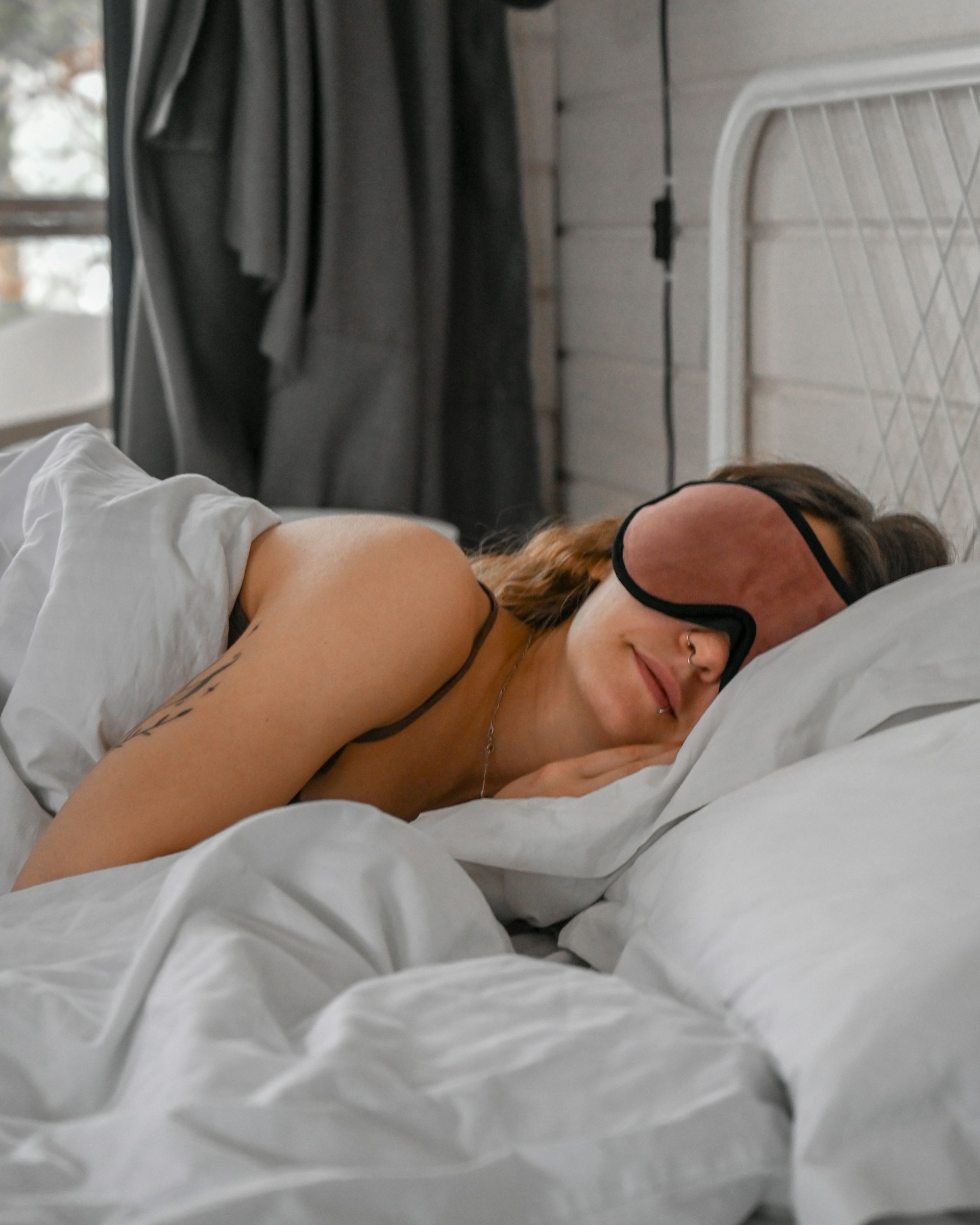
Get serious about darkness. Even small amounts of light suppress melatonin and disrupt your circadian rhythm. Blackout curtains or a quality sleep mask are worth the investment. Blue light from phones and screens is especially disruptive because it mimics daylight — your brain genuinely interprets it as a signal to stay awake. Try a technology curfew at least an hour before bed.
Keep a consistent schedule. Going to bed and waking up at roughly the same time every day — including weekends — is one of the highest-leverage habits for sleep quality. Your circadian rhythm is essentially a biological habit, and consistency is what strengthens it.
Time your evening training. Intense exercise within two to three hours of bedtime can delay sleep onset for some people by elevating core temperature and stimulating the nervous system. If you train in the evenings and sleep is a struggle, try shifting workouts earlier or extending your cool-down to help your body transition.
Cut caffeine earlier than you think. Caffeine has a half-life of roughly five to six hours — so that 3 PM coffee is still partially active at 9 PM. If sleep quality is suffering, try cutting off caffeine by noon and give it a few weeks to see the difference.
Reconsider the nightcap. Alcohol might help you fall asleep, but it significantly disrupts sleep architecture throughout the night — suppressing REM, increasing fragmentation, and often causing early waking. If recovery is a real priority, reducing alcohol consumption (especially close to bedtime) tends to produce fast, noticeable improvements in how you feel and train.
Time your last meal thoughtfully. Large meals close to bed keep your digestive system active when it should be winding down. Aim to finish your last substantial meal two to three hours before sleep. A small snack combining a little complex carbs and protein closer to bedtime can actually support sleep — but keep it light.
When Better Habits Still Aren’t Enough
Sometimes you do everything right and still wake up exhausted. That’s worth taking seriously rather than pushing through.
Sleep apnea is far more common than most people realize and frequently goes undiagnosed. It causes repeated breathing interruptions that prevent deep sleep, leaving you exhausted despite technically spending eight hours in bed. Symptoms include loud snoring, morning headaches, and persistent daytime fatigue. If that sounds familiar — or if a partner has noticed unusual breathing patterns during your sleep — it’s worth talking to a doctor. Treating sleep apnea can dramatically change how you feel, recover, and perform.
Chronic insomnia often has roots in stress, anxiety, or other underlying factors. Cognitive behavioral therapy for insomnia (CBT-I) is one of the most evidence-backed treatments available and tends to be more effective long-term than sleep medication. If insomnia is persistent, addressing it directly — rather than white-knuckling through it — is the move.
Tracking Sleep for Fitness: What’s Actually Worth Paying Attention To
You don’t need expensive equipment to improve your sleep. But tracking simple patterns can help you spot what’s working and what isn’t.
Start low-tech: rate your sleep quality each morning on a simple 1–5 scale and note your energy and performance throughout the day. Over two to four weeks, patterns emerge. You might notice your recovery tanks after late-night training, or that certain habits consistently fragment your night.
Wearables that track heart rate and movement can give you a rough picture of time in different sleep stages. They’re not as precise as a clinical sleep study, but they’re genuinely useful for spotting trends — like whether alcohol reliably disrupts your sleep or whether your deep sleep dips during high-stress weeks.
The goal isn’t to obsess over every data point. It’s to understand your own patterns well enough to support them.
The Bottom Line: How Sleep Affects Your Fitness More Than You Think
Here’s the reframe that tends to actually stick: sleep isn’t recovery from training. Sleep is training.
It’s where your muscles get built. It’s where your nervous system resets. It’s where your hormones rebalance, your inflammation resolves, and your motivation regenerates for tomorrow. Skipping or shortchanging it doesn’t make you more dedicated — it just makes everything else less effective.
If you’ve been hitting a wall with your progress and you’re averaging six hours of sleep a night, you probably don’t need a new program or a different supplement stack. You need to go to bed earlier. Start there — give it two genuine weeks of prioritizing seven to nine hours — and then reassess everything else.
The results might genuinely surprise you.
Frequently Asked Questions: How Sleep Affects Fitness
Does poor sleep affect muscle growth?
Yes, significantly. Growth hormone — the primary driver of muscle repair and development — is released mainly during deep sleep. Consistently sleeping fewer than six hours can reduce growth hormone secretion by up to 70%, meaning your muscles aren’t recovering or growing the way your training demands.
Can lack of sleep cause weight gain even if you’re exercising?
It can absolutely work against fat loss. Sleep deprivation elevates cortisol, reduces leptin (your fullness signal), increases ghrelin (your hunger signal), and worsens insulin sensitivity — all of which make it easier to overeat and harder to burn fat efficiently.
How many hours of sleep do you need to build muscle?
Most people benefit from seven to nine hours. Those in heavy training phases often need to be at the high end of that range. Some research supports that athletes can benefit from up to ten hours during peak training blocks.
Does sleeping more improve workout performance?
Yes. Studies on athletes show that increasing sleep — even by extending to eight or nine hours from a baseline of six or seven — improves reaction time, accuracy, sprint speed, and endurance. Sleep extension is one of the most underused performance tools available.
What time should you stop exercising before bed?
A general guideline is to avoid intense exercise within two to three hours of bedtime. This gives your core temperature and nervous system time to wind down. Some people are less sensitive to evening training than others — pay attention to your own sleep patterns to figure out what works for you.
Kaye is a mother of two boys who is on a mission to improve her physical and mental well-being. With a passion for trying new beauty products and stacking her supplement intake, Kaye is always eager to discover new ways to enhance her lifestyle.













Leave a Reply